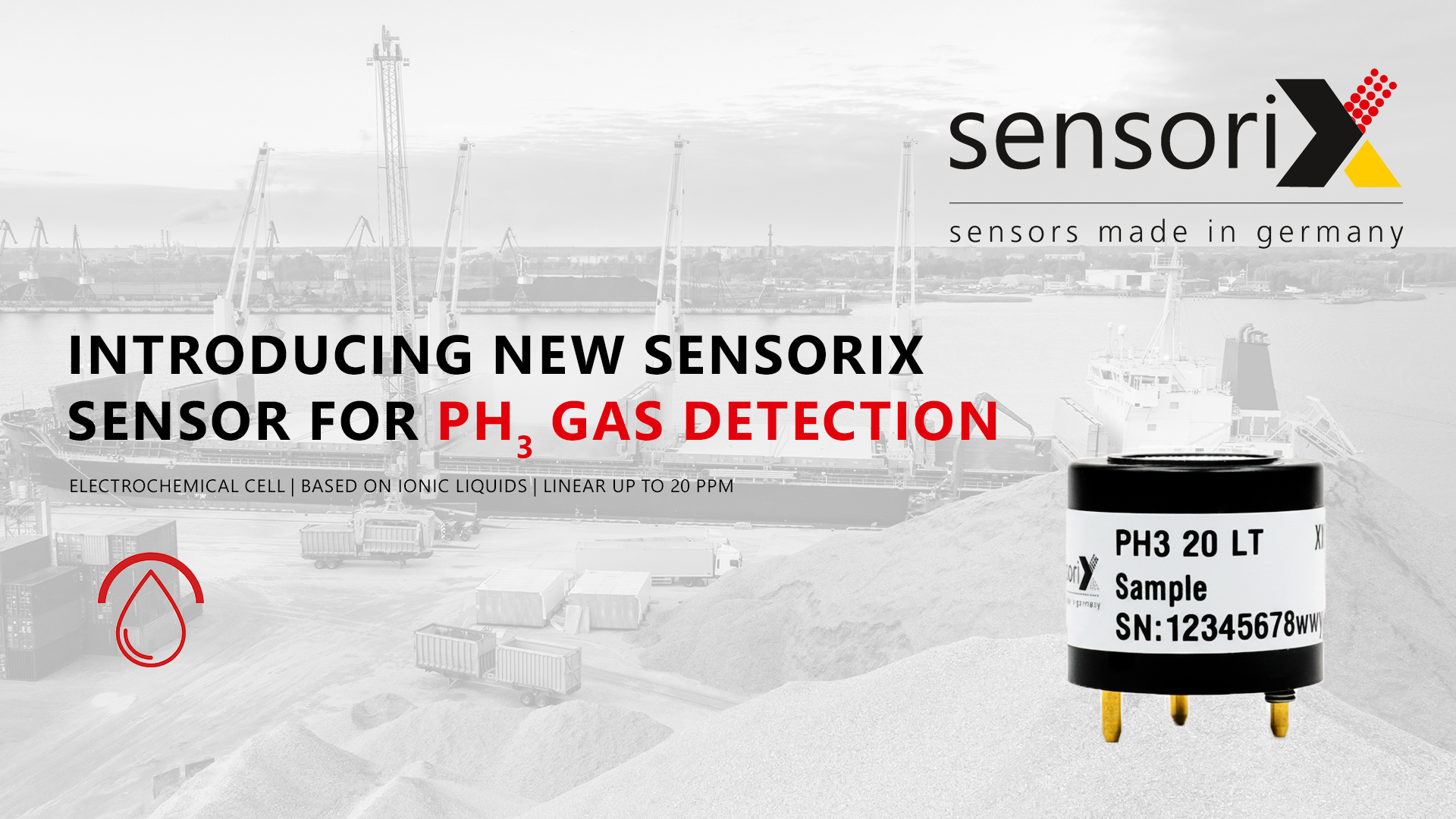
Sensorix PH₃ Gas Sensor: Electrochemical Gas Sensor for 0–20 ppm Phosphine Detection
Sensorix introduces the new Sensorix PH3 20 LT, an electrochemical sensor for the detection of phosphine (PH₃) with the measurement range of 0–20 ppm. Designed for integration into portable and fixed gas detection instruments, the sensor combines three-electrode technology with an electrolyte based on ionic liquids to support a stable baseline and reliable long-term performance.
The Sensorix PH3 gas sensor is suitable for leak monitoring, workers’ protection and industrial safety applications where phosphine must be detected in the low- to mid-ppm range.
What’s new (quick overview)
- Measurement range: 0–20 ppm phosphine (PH₃)
- Sensor technology: Three-electrode electrochemical technology
- Electrolyte type: Ionic-liquid-based electrolyte
- Application focus: Low- to mid-range phosphine monitoring for industrial safety applications, including semiconductor manufacturing, fumigation and grain-storage operations
- Sensor sizes: 4S, 7S, Classic, Smart (with EPROM), and Mini, compatible with both portable detectors and fixed detection systems
Why PH3 Gas Detection Matters
Phosphine gas is used in demanding industrial environments, including semiconductor manufacturing, fumigation, and grain-storage operations. After fumigation processes, for example in grain stores and shipping containers, reliable gas detection can help support safe re-entry, leak monitoring and personnel protection. Because phosphine is toxic and flammable, detecting gas at low or mid concentrations is an important part of an effective safety concept.
The Sensorix PH3 20 LT: Stable performance for reproducible measurements

The Sensorix PH3 20 LT is based on three-electrode electrochemical technology and uses an electrolyte based on ionic liquids. The low volatility of the ionic liquid helps, among others reduce electrolyte drying. This contributes to a stable baseline and supports reliable long-term sensor performance.
Additional specified performance characteristics include:
| Characteristic | Specification of Sensorix PH3 20 LT |
|---|---|
| Target gas | Phosphine (PH₃) |
| Measurement range | 0–20 ppm |
| Expected operating life | More than 18 months in air |
| Sensor type | 3‑electrode electrochemical |
| Electrolyte type | Ionic-liquid-based |
| Sensitivity | 1,100 ± 500 nA/ppm |
| Response time | T90 ≤ 45 seconds at two minutes of gas exposure |
| Baseline in clean air | < ±0.02 ppm at midpoint sensitivity |
| Linearity | <10% of full scale |
| Repeatability | <2% |
| Long-term output drift | <10% per six months |
The combination of all sensor characteristics, stable baseline performance, and a defined response profile support the development of measuring instruments that require a reproducible signal over the intended operating period.
Actual performance and service life may depend on the complete instrument design, environmental conditions, exposure profile, storage and maintenance procedures.
Flexible PH3 gas sensor sizes for portable and fixed gas detection systems
Instrument manufacturers can select from several sensor formats to match their mechanical and electrical integration requirements. The Sensorix PH3 20 LT gas sensor is available in 4S, 7S, Mini, Classic 4-pin, Classic 8-pin-compatible, and Smart 8p with EPROM versions.

Additional PH3 gas sensor solutions from Sensorix
The Sensorix portfolio includes further PH3 sensor solutions for different detection requirements, measuring gas concentrations in the range 0–1 ppm, and with no cross-sensitivity to hydrogen. Instrument manufacturers can select a suitable phosphine sensor range for the intended monitoring task and system architecture.
Please contact Sensorix to discuss the appropriate PH3 sensor solution for your application.
Sensorix PH3 20 LT: Samples & Next Steps
Are you developing a portable phosphine detector or a fixed gas detection system? Contact the Sensorix team to discuss your PH3 gas detection requirements and application-specific needs.
Sensorix PH3 20 LT: Download the technical datasheet
Access the Sensorix PH3 20 LT technical datasheet for detailed specifications, integration information, and operating conditions.
Related content